
The signal
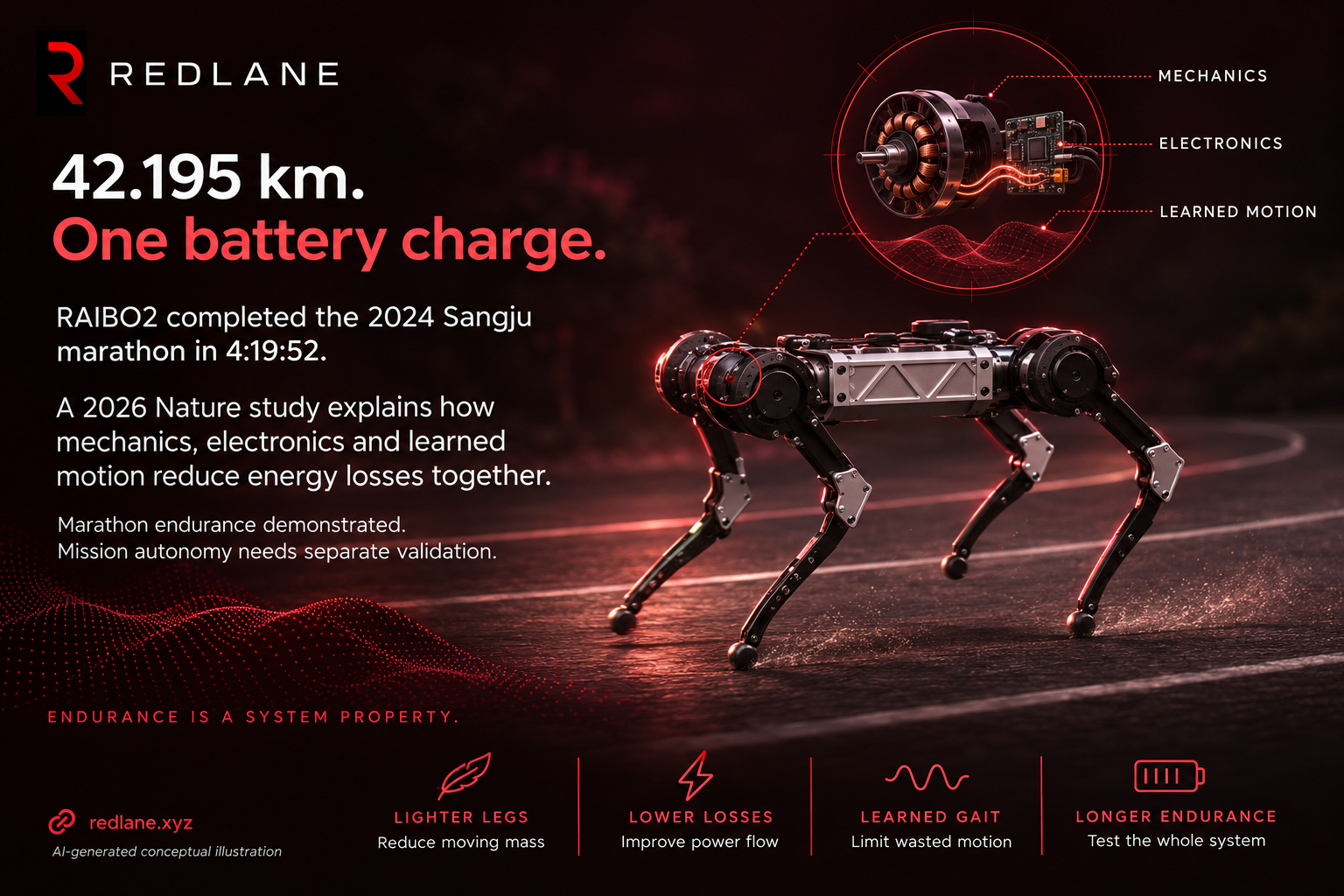
On 17 November 2024, KAIST’s RAIBO2 completed the 42.195-kilometre Sangju Dried-Persimmon Marathon in 4 hours, 19 minutes and 52 seconds. KAIST’s original event report records the run. A Nature paper published on 23 September 2026 now explains the engineering behind the single-charge result. The race and the publication are separate milestones.
How the system saves energy
The researchers treated endurance as a problem involving the entire robot. Their energy-loss analysis connects lightweight hardware that transmits motor torque with low resistance, lower-resistance motor-driving electronics and a movement policy designed to waste less energy. Each part affects the others: efficient electronics alone cannot remove the energy lost when feet strike the ground. The contribution is a coordinated design across these sources of loss.
The released training and evaluation code includes comparisons that remove individual objectives for motor heating losses, foot-collision losses and smooth ground forces. Those tests make the control strategy inspectable: researchers can examine how particular learning objectives affect movement.
What was measured
Nature Portfolio reports 1,280 watt-hours consumed during the marathon and an average total cost of transport of 0.25. This metric normalizes movement energy for weight and distance; a lower value means less energy used under that definition. It is neither the fraction of battery remaining nor a universal ranking of robots against people.
According to KAIST’s research announcement, the team matched voltage, current, temperature and battery readings with GPS position, speed and altitude. Researchers accompanied the robot and filmed the event. This provides evidence of sustained outdoor operation, beyond a short laboratory demonstration or an estimated maximum range.
Where the evidence stops
KAIST also identifies the next engineering requirements: reproducing performance across multiple machines, reducing manufacturing cost and meeting requirements for water, dust, temperature, vibration and electromagnetic compatibility. Finishing one race does not establish reliable autonomous work in a disaster zone. The lab’s account describes a team including a controller, camera operator and crowd support.
Commercial development is progressing. Raion Robotics presents RAIBO2 as a platform for field operation, payload integration and navigation, with sales and demonstration enquiries available. Those manufacturer descriptions give the work a product context; they are separate from the specific performance demonstrated by the marathon study.
The REDLANE perspective
For REDLANE, the useful signal is a change in the question we ask of a robot. An impressive movement shows what a machine can do for a moment. Endurance asks whether it can keep doing useful work within an energy budget. We would next look for repeated tasks with a stated payload, terrain, weather and level of human assistance, together with charging and maintenance needs. That evidence would connect an engineering achievement to dependable service. The marathon makes the case for designing the whole system together; practical value depends on what remains consistent after the finish line.